British Sugar Wissington: Automation Driving UK's Main Sugar & Ethanol Supply
In the heart of the UK's agricultural landscape lies a titan of industry: British Sugar's Wissington plant. More than just a factory, this site represents a critical pillar in the nation's food and energy security, supplying a significant portion of the UK's sugar demand and playing an increasingly vital role in bioethanol production. The story of Wissington British Sugar is not just one of scale, but of relentless innovation, with automation and cutting-edge technology at its core, continually transforming a century-old operation into a beacon of modern industrial efficiency.
Since its inception in 1925, the Wissington facility has evolved dramatically, moving far beyond its humble beginnings to become Europe's largest sugar processing plant. This transformation underscores British Sugar's unwavering commitment to embracing new methodologies, investing heavily in infrastructure, and adopting advanced automation solutions to meet complex market demands. As a wholly owned subsidiary of AB Sugar, part of the international food and ingredients giant Associated British Foods (ABF), British Sugar leverages extensive resources to maintain its leadership position, consistently pouring millions into modernization initiatives to ensure its operations remain competitive, sustainable, and capable of delivering outstanding service to its customers across the UK.
The Unrivaled Scale of Wissington British Sugar: A Century of Sweet Success
The iconic steam plume rising from the Wissington British Sugar factory is a seasonal landmark, signaling the commencement of the annual sugar beet campaign. This visible testament to continuous operation is just one facet of a facility that has been a cornerstone of regional prosperity and national supply for nearly a century. From slicing a mere 600 tonnes of sugar beet per day when it first opened, the factory now processes an astounding 20,000 tonnes daily, slicing more in an hour today than it did in an entire day in its early years. This monumental increase in throughput positions Wissington as not only the UK's largest sugar beet factory but also one of Europe's most efficient sugar processing sites.
Annually, the plant transforms over 3.3 million tons of locally sourced sugar beet – supplied by around 800 dedicated growers – into over 440,000 tons of high-quality sugar. This staggering output ensures that British Sugar can efficiently supply around half of the UK's total sugar demand, showcasing the strategic importance of the
Wissington Factory: A Century of Powering UK Sugar and Efficiency. Yet, sugar is only part of the story. Wissington has also pioneered bioethanol production in the UK, converting a significant portion of its beet into 70,500 tons of ethanol each year, utilized for motive or electric power. This dual-output model not only maximizes the value of every sugar beet but also exemplifies British Sugar’s commitment to resource efficiency and a diversified product portfolio. The principle of "nothing goes to waste" is deeply embedded in the plant's operational philosophy, driving innovation to utilize by-products effectively and minimize environmental impact.
Revolutionizing Logistics: The AS/RS Innovation at Wissington British Sugar
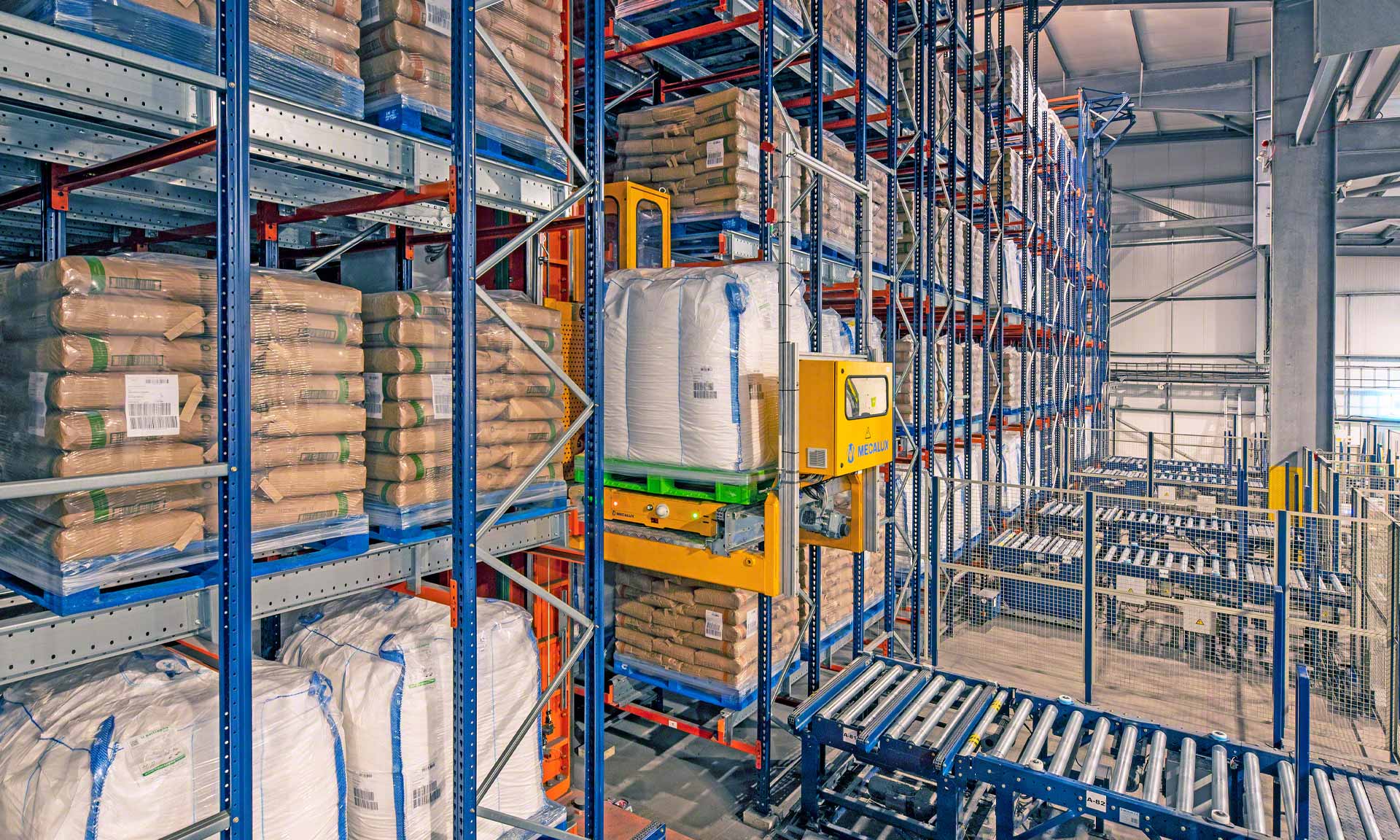
With such immense production figures – approximately 1,500 pallets of finished goods leaving the production lines daily – the challenge of efficient storage and retrieval becomes paramount. Historically, British Sugar relied on traditional manual pallet racks, which, while functional, presented significant limitations. Operators spent considerable time manually loading and unloading pallets, leading to bottlenecks, higher labor costs, and insufficient storage capacity to accommodate the ever-increasing output. Recognising that future growth prospects demanded a smarter approach, British Sugar made a decisive move towards automation.
Their solution came in the form of an advanced Automated Storage and Retrieval System (AS/RS) from Mecalux, a strategic investment that fundamentally transformed their warehousing operations. Specifically, the implementation of a Pallet Shuttle system combined with stacker cranes represented a monumental leap forward. This cutting-edge AS/RS maximizes every inch of available surface area, providing dense, high-capacity storage that was previously unattainable. The automation extends to every movement within the warehouse: stacker cranes, conveyors, and motorized shuttles work in seamless concert, automating the entire flow of goods.
The benefits have been transformative:
- Increased Storage Capacity: The dense storage solution significantly expanded the plant's ability to house finished products, overcoming previous limitations.
- Accelerated Throughput: Automated inflows and outflows dramatically speed up the movement of goods, ensuring that products can be retrieved and dispatched swiftly to meet customer demands.
- Enhanced Operational Efficiency: By removing the need for manual handling, the system reduces labor dependency for routine tasks, allowing personnel to focus on more strategic activities.
- Improved Safety: Automation minimizes human interaction with heavy machinery and pallets, creating a safer working environment.
- Optimized Inventory Management: The system provides precise control over inventory, reducing errors and improving traceability.
This strategic embrace of automation underscores British Sugar's foresight and commitment to operational excellence. For a deeper dive into how this specific technology integrates into their vast operations, explore
British Sugar Wissington: Europe's Largest Plant's AS/RS Innovation.
A Digitally Connected Future: IoT and 4G at Wissington
The adoption of the AS/RS is just one facet of British Sugar's broader, ambitious modernization plan. With over $280 million invested in recent years to double production capacity across its four main production centers, the company is meticulously building a future-proof operation. This vision extends beyond physical automation to encompass a comprehensive digital transformation, leveraging the power of the Internet of Things (IoT) and robust connectivity.
Recognizing the foundational role of a secure and reliable digital environment, British Sugar has forged a pivotal agreement with broadband service provider Virgin Media O2 to connect its factories, including Wissington, to 4G technology. This high-speed, low-latency connectivity is not merely an upgrade; it's an enabler for the next generation of industrial automation and data-driven intelligence.
The integration of IoT with 4G connectivity at Wissington British Sugar facilitates:
- Real-Time Data Acquisition: Sensors embedded throughout the production and storage processes collect continuous data on equipment performance, energy consumption, and product flow.
- Predictive Maintenance: By analyzing real-time data, systems can predict potential equipment failures before they occur, scheduling maintenance proactively and minimizing costly downtime.
- Optimized Operations: Insights derived from IoT data allow for dynamic adjustments to production schedules, energy usage, and logistics, enhancing overall efficiency.
- Enhanced Security: A dedicated and secure 4G network provides a more robust and reliable foundation for operational technology (OT) systems, safeguarding critical processes from cyber threats.
- Remote Monitoring and Control: Empowering operators and managers with the ability to monitor and potentially control aspects of the plant remotely, improving responsiveness and flexibility.
This proactive investment in digital infrastructure positions Wissington British Sugar at the forefront of the Smart Factory revolution. It's a strategic move that not only boosts immediate efficiency and security but also lays the groundwork for future advancements, such as AI-driven optimization and autonomous operations, ensuring the plant remains agile and resilient in a rapidly changing market.
Practical Insights from British Sugar's Automation Journey
The journey of Wissington British Sugar offers valuable lessons for any industry contemplating significant investment in automation and digital transformation. It highlights that true innovation is not just about adopting new technology, but about strategically integrating it to solve specific operational challenges and unlock new levels of efficiency and capability.
For businesses considering a similar path, key takeaways from the Wissington model include:
- Identify Bottlenecks Clearly: British Sugar's move to AS/RS was driven by tangible problems like limited storage and manual handling inefficiencies. A clear problem statement is crucial for selecting the right solution.
- Invest Strategically in Long-Term Vision: The $280 million investment and the 4G connectivity deal demonstrate a commitment to a multi-year modernization plan, not just piecemeal upgrades. Think beyond immediate fixes.
- Integrate Technologies Holistically: Automation (AS/RS) combined with connectivity (4G) and data intelligence (IoT) creates a synergistic effect that far exceeds the sum of individual components.
- Prioritize Safety and Security: A "secure digital environment" is paramount for critical infrastructure. Robust connectivity and cybersecurity measures must be integral to the plan.
- Embrace Continuous Evolution: Wissington has been transforming since 1925. Successful operations are not static; they adapt, innovate, and reinvest constantly to maintain competitiveness.
British Sugar's proactive approach ensures that the Wissington plant is not merely reactive to market changes but is equipped to anticipate and shape them. By fostering a culture of innovation and strategically deploying advanced technologies, the company fortifies its position as a reliable, efficient, and forward-thinking supplier for the UK.
Conclusion
The British Sugar Wissington plant stands as a powerful testament to the transformative power of automation and strategic investment in industrial technology. From its origins in 1925 to its current status as Europe's largest and most efficient sugar processing and bioethanol production facility, Wissington has continually redefined what is possible. By embracing advanced AS/RS solutions, securing robust 4G connectivity, and integrating the Internet of Things, British Sugar has not only optimized its operational output – producing over 440,000 tons of sugar and 70,500 tons of ethanol annually – but has also fortified the resilience and security of the UK's vital food and energy supply chains. The journey of Wissington British Sugar is a compelling narrative of how commitment to innovation, coupled with a forward-thinking modernization strategy, can ensure sweet success for decades to come.